
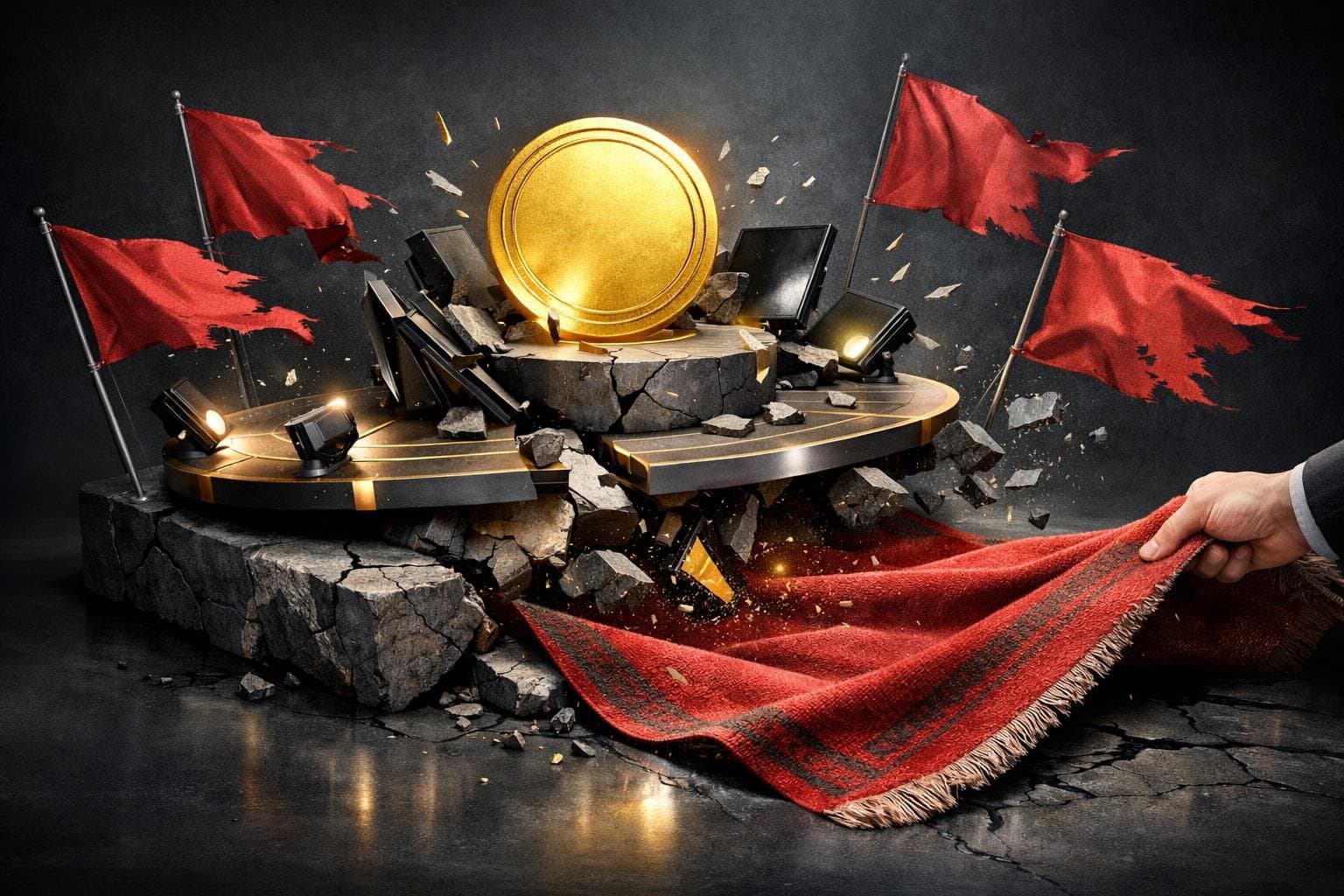
What is a Rug Pull?
A rug pull occurs when cryptocurrency developers abandon a project and run away with investor funds. This typically happens after artificially inflating the token's price through marketing and hype.
Types of Rug Pulls
Hard Rug Pulls
Developers code malicious functions into the smart contract that allow them to:
- Steal all liquidity from the trading pool
- Prevent investors from selling their tokens
- Mint unlimited tokens to sell into the market
Soft Rug Pulls
Developers slowly exit their positions over time while:
- Reducing development activity
- Cutting marketing efforts
- Making excuses for delays
- Eventually ghosting the community
Warning Signs to Watch For
Anonymous or Pseudonymous Teams
While privacy is valued in crypto, completely anonymous teams present higher risk. Look for:
- No LinkedIn profiles or professional history
- Team photos that reverse-image search to stock images
- Vague or unverifiable credentials
Unrealistic Promises
Be extremely skeptical of projects promising:
- Guaranteed returns or specific price targets
- Revolutionary technology without technical documentation
- Partnerships with major companies (verify independently)
- "Risk-free" investments
Concentrated Token Holdings
Check the token distribution:
- If a few wallets hold most of the supply, they can crash the price
- Look for locked liquidity and team token vesting schedules
- Verify claims using blockchain explorers
No Audit or Fake Audits
- Legitimate projects get audited by reputable firms
- Verify audits directly on the auditor's website
- Understand that audits don't guarantee safety—they're just one factor
Aggressive Marketing, Thin Substance
- Heavy spending on influencers and ads
- Pressure to buy immediately
- Dismissing legitimate questions as "FUD"
- More focus on price than product
Due Diligence Checklist
Before investing in any project:
- Read the whitepaper – Does it make technical sense?
- Review the smart contract – Has it been audited? By whom?
- Check token distribution – Are holdings reasonably distributed?
- Verify the team – Can you find their professional history?
- Assess the community – Are questions welcome or censored?
- Look for the product – Is there a working product or just promises?
- Check the code repository – Is development active and transparent?
Protecting Yourself
- Never invest more than you can afford to lose
- Diversify across multiple projects
- Take profits when you have them
- Be skeptical of hype and FOMO
- If something feels wrong, trust your instincts
How to Review Liquidity Claims
Liquidity is central to many rug pulls. A token can show a large market value on a chart, but if the trading pool has little real liquidity, a few sales can crash the price. Before buying, check whether liquidity is locked, who controls the liquidity provider tokens, and when any lock expires.
Locked liquidity is helpful, but it is not a complete safety guarantee. A project can lock a small amount of liquidity for marketing while insiders still hold a large token supply. A lock can also expire soon after launch. Look for the size of the lock, the duration, the platform used, and whether the lock details can be verified on-chain.
If the project claims that liquidity is locked or burned, do not rely only on screenshots. Use a blockchain explorer or reputable token analytics tool to confirm the transaction. Screenshots are easy to fake, and scammers know most buyers will not verify them.
Reading the Smart Contract at a Basic Level
You do not need to be a developer to spot some contract risks. Many blockchain explorers show whether a contract is verified, who owns it, and whether ownership has been renounced or transferred. These signals are not perfect, but they can reveal obvious problems.
Pay attention to functions or warnings related to:
- Minting new tokens after launch
- Blocking selected wallets from selling
- Changing buy or sell taxes
- Pausing transfers
- Excluding insiders from fees
- Transferring ownership back to the deployer
Some legitimate projects need administrative controls early in development, but they should explain why those controls exist and how they will be limited. Silence or hostility around contract permissions is a warning sign.
Community Behavior Matters
Scam projects often manage the community aggressively. They may delete difficult questions, ban users who ask about token distribution, or pressure members to promote the token before there is a working product. A healthy project can answer basic questions without attacking the person asking.
Watch how the team handles delays and criticism. Real builders usually provide specific updates, acknowledge tradeoffs, and avoid making every issue about price. Scam teams often use vague excuses, countdown timers, influencer posts, and emotional language to keep people buying.
Safer Research Workflow
Create a rule that no new token purchase happens on the same day you discover it. This single delay can prevent many FOMO-driven losses. Use the waiting period to read the documentation, inspect the contract, check liquidity, review team history, and compare claims against independent sources.
If you still want exposure after research, size the position as a high-risk speculation, not as a core investment. A project can pass several checks and still fail. Risk control matters because due diligence reduces risk; it does not remove it.
What to Do After Spotting a Likely Rug Pull
Do not argue with promoters or try to convince the whole community in real time. Save evidence, warn people you personally know if appropriate, and avoid connecting your wallet to any related tools that claim to help you exit or recover funds. Scam ecosystems often create secondary phishing sites aimed at victims trying to recover losses.
If you already bought the token, review whether selling is possible, revoke approvals connected to project dApps, and move unrelated assets to a safer wallet if you signed suspicious transactions. Keep records of wallet addresses, transaction hashes, websites, and communications in case you decide to report the incident.
Post-Launch Monitoring
A project can look reasonable at launch and become risky later. Continue watching wallet concentration, liquidity locks, developer activity, treasury movement, and communication quality after buying. Sudden changes in taxes, unexplained token transfers from team wallets, deleted roadmap items, or repeated delays without details are reasons to reassess.
Do not rely on price alone as proof that a project is safe. Many rug pulls rise sharply before collapsing because early price movement attracts more buyers. Treat strong price action as a reason to review risk, not as a substitute for due diligence.
Conclusion
Rug pulls exploit greed and FOMO. The best protection is thorough research, healthy skepticism, and the discipline to walk away from opportunities that seem too good to be true. Remember: legitimate projects don't need to pressure you into investing immediately.